In a country made up of more than 7,000 islands, emergency medical transportation is often a race against time. Rescue helicopters in the Philippines play a vital role in emergencies by helping patients reach medical facilities when ground transport cannot provide timely access. Heavy traffic, remote provinces, mountainous terrain, and limited access to specialized hospitals can make ground transport difficult during critical situations.
What Are Rescue Helicopters?
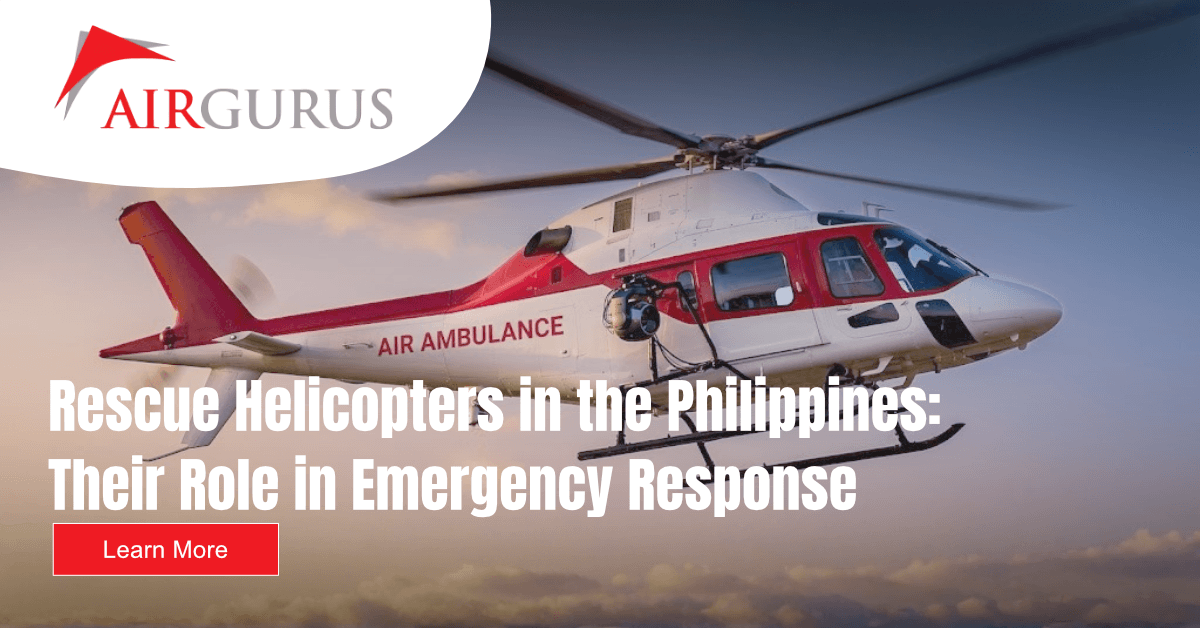
Rescue helicopters are aircraft specifically used to support emergency response, search and rescue operations, medical evacuations, and disaster relief efforts.
Unlike conventional transportation, helicopters can land in areas that may be inaccessible to ambulances and other emergency vehicles. This capability makes them valuable during emergencies involving remote locations, mountainous terrain, offshore incidents, and areas affected by natural disasters.
A rescue helicopter can also serve as an air ambulance, providing medical care while transporting patients to healthcare facilities.
Supporting Medical Evacuations and Emergency Patient Transfers
One of the most important roles of rescue helicopters is supporting MEDEVAC operations. The Philippine Air Force has also used rescue aircraft and aeromedical teams in medical evacuation exercises, highlighting the role of air assets in emergency patient transport. Read more about Philippine Air Force MEDEVAC operations
Medical evacuation missions transport patients from emergencies, remote areas, and hospitals to facilities with advanced medical care.
As part of an air medical service, rescue helicopters can quickly transfer patients who need urgent care.
Rescue Helicopters: Bridging the Gap in Emergency Medical Care
Rescue helicopters play a critical role in emergency response throughout the Philippines. Their ability to rapidly access remote areas, support medical evacuations, and transport patients to healthcare facilities makes them an essential component of the country’s emergency medical system.
Whether responding to accidents or natural disasters rescue helicopters help connect patients to life-saving care when every second matters.
These aircraft support faster and safer emergency medical transportation across the country.
Airgurus provides coordinated medical evacuation services to help patients access timely care across the Philippines.
About Airgurus
Airgurus provides fast and reliable air medical service for emergencies, ensuring safe and efficient patient transport. Our CAAP and DOH compliant air ambulance team offers dependable air ambulance and medevac solutions, including ICU air ambulance care, rescue helicopters, and life flights for urgent situations. We manage both domestic and international medevac, coordinating with hospitals and healthcare professionals to ensure patients reach the right medical facilities across the Philippines and beyond. Whether it’s city-to-city transfers or reaching remote areas, Airgurus prioritizes safety, speed, and patient comfort. Call our air ambulance number +63 9178857911 today to learn more about how our air medical transport services can support your emergency needs.
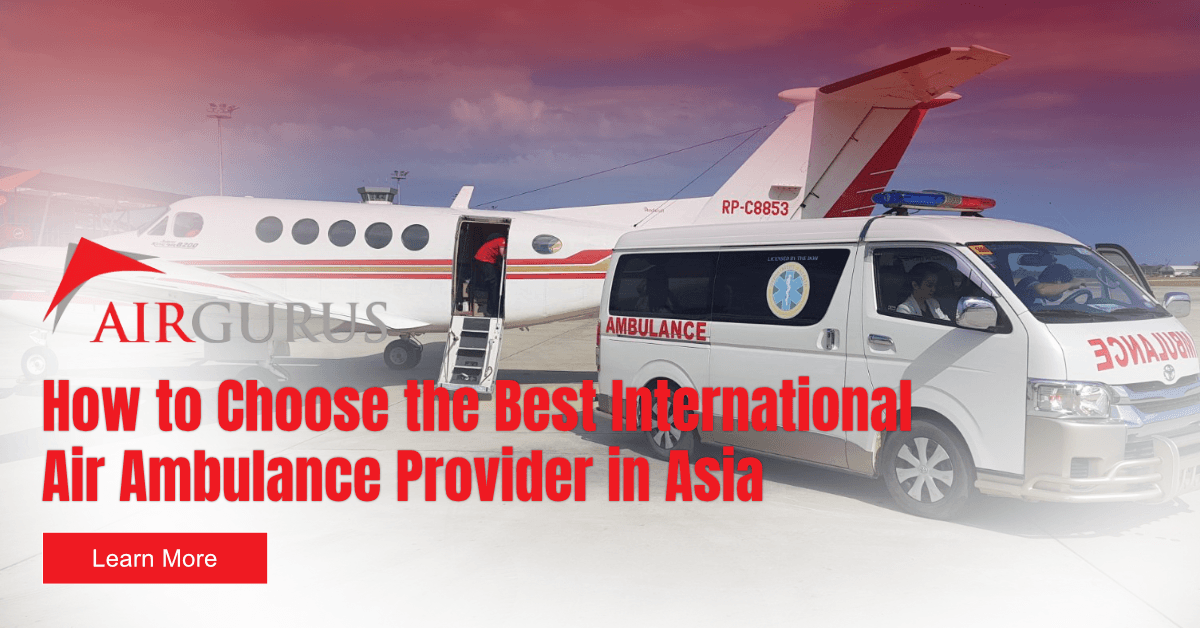
When a medical emergency requires treatment beyond a patient’s local healthcare facility, choosing an international air ambulance provider becomes an important decision. Whether the transfer involves specialized treatment, critical care transport, or medical repatriation, the right provider can help ensure that patients receive safe and appropriate medical care throughout their journey.
With many air medical service providers offering international medevac across Asia, knowing what to look for can help patients and families make informed decisions during a stressful time.
Assess the Medical Capabilities of an International Air Ambulance
Not all life flight providers offer the same level of medical care. When comparing providers, it is important to assess their clinical capabilities and the kind of patients they are equipped to transport.
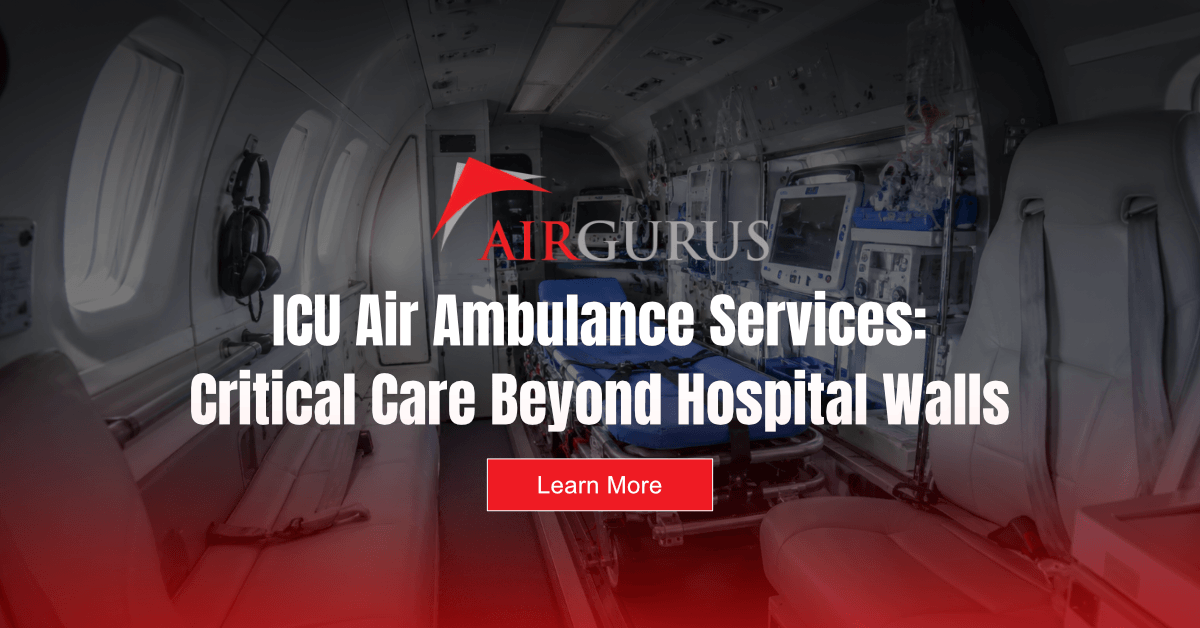
For critically ill patients, an ICU Air Ambulance may be necessary. These specialized aircraft are equipped with advanced medical equipment and staffed by trained healthcare professionals capable of providing intensive care during transport.
Depending on the patient’s condition, onboard capabilities may include:
Mechanical ventilators
Cardiac monitors and defibrillators
Oxygen support systems
Infusion pumps
Emergency medications
Critical care monitoring equipment
Hospital-level care during transit is an important factor when arranging an international medical transfer.
Verify Regulatory Compliance and Safety Standards
Patient safety should always be a top priority when selecting an air ambulance provider.
Families should look for a CAAP and DOH compliant air ambulance when arranging medical transport from the Philippines. The Civil Aviation Authority of the Philippines (CAAP) provides guidance for air ambulance operations, including requirements and recommendations for emergency medical services.
Also consider the provider’s safety record, medical protocols, aircraft maintenance, and experience with international medical missions.
Choosing an experienced and compliant provider like Airgurus can help reduce risks and ensure a smoother transfer process.
Assess International Network and Destination Coverage
An experienced provider should have the capability to coordinate medical transfers across multiple countries and healthcare systems.
Many patients from the Philippines seek treatment at specialized and advanced hospitals throughout Asia. Common destinations include Singapore, Japan, Korea, and China.
An established provider should have experience coordinating hospital admissions, medical clearances, ground transportation, and flight logistics for these destinations.
Strong international partnerships can significantly improve the efficiency of patient transfers and help minimize delays during critical situations.
Choosing the Best International Air Ambulance Provider in Asia
International medical transport requires careful planning, specialized medical expertise, and seamless coordination. Whether a patient requires treatment in Singapore, Japan, Korea, China, or another destination in Asia, choosing the right provider is critical to ensuring a safe and successful transfer.
The best international medevac providers offer more than transportation. They combine medical expertise, regulatory compliance, and coordinated care to support patients during critical moments.
Airgurus provides coordinated life flights and international medical transport for safe, efficient patient transfers across Asia and beyond.
About Airgurus
Airgurus provides fast and reliable air medical service for emergencies, ensuring safe and efficient patient transport. Our CAAP and DOH compliant air ambulance team offers dependable air ambulance and medevac solutions, including ICU air ambulance care, rescue helicopters, and life flights for urgent situations. We manage both domestic and international medevac, coordinating with hospitals and healthcare professionals to ensure patients reach the right medical facilities across the Philippines and beyond. Whether it’s city-to-city transfers or reaching remote areas, Airgurus prioritizes safety, speed, and patient comfort. Call our air ambulance number +63 9178857911 today to learn more about how our air medical transport services can support your emergency needs.
Medical emergencies do not always occur within the confines of a hospital. In many cases, critically ill or injured patients need to be transported between healthcare facilities, across regions, or even internationally to access specialized treatment. For patients requiring intensive care throughout the journey, an ICU air ambulance provides the specialized equipment and medical support needed to maintain continuous care during transport.
These aircraft function as flying intensive care units, providing continuous care during transport.
What Is an ICU Air Ambulance?
An ICU air ambulance provides advanced life support and medical care for critically ill patients during transport.
Unlike conventional patient transfers, ICU air ambulance missions are designed for individuals who require constant monitoring, and advanced medical interventions.
These aircraft may be equipped with:
Mechanical ventilators
Cardiac monitors and defibrillators
Infusion pumps
Oxygen delivery systems
Emergency medications
Advanced airway management equipment
The goal is to provide hospital-level care in transit, ensuring continuity of treatment from departure to arrival.
When Is an ICU Air Ambulance Needed?
Not every patient requires intensive airborne medical care. However, certain medical conditions may necessitate an ICU Air Ambulance to ensure safe transport.
Common situations include:
Severe trauma and accident injuries
Stroke and neurological emergencies
Cardiac emergencies
Organ failure
Patients requiring ventilator support
High-risk neonatal and pediatric transfers
Post-surgical critical care transport
An air medical service helps patients receive continuous care during transfers to specialized medical facilities.
Supporting Domestic and International Medical Transfers
The need for specialized medical care often extends beyond local hospitals. Some patients may require treatment at advanced medical centers located in other countries.
International medevac services safely transport critically ill patients to healthcare facilities abroad while providing intensive care support throughout the journey. The World Health Organization (WHO) Prehospital Emergency Care Toolkit highlights the importance of rapid transport, appropriate medical facilities, trained personnel, equipment, and coordination during patient transfers.
Common destinations for medical transfers from the Philippines include Singapore, Japan, Korea, and China.
These transfers require coordination between physicians, hospitals, and medical teams to ensure continuous care.
Choosing the Right Air Ambulance Provider
Selecting an experienced provider is essential when transporting critically ill patients. Beyond aircraft availability, families should evaluate the provider’s medical capabilities, operational experience, and ability to coordinate complex transfers.
A reliable air ambulance provider should have qualified medical teams, advanced onboard medical equipment, and compliance with established healthcare and aviation requirements. Airgurus operates as a CAAP and DOH compliant air ambulance provider, following applicable safety and medical standards to support professionally coordinated patient transfers.
Whether in the Philippines or overseas, choosing a provider with proven expertise in critical care air transport and strong safety protocols is essential.
Extending Critical Care Beyond Hospital Walls
An ICU Air Ambulance provides more than transportation, it delivers critical care beyond hospital walls. By combining advanced medical equipment, specialized healthcare professionals, and rapid medical transport capabilities, these services help ensure that critically ill patients receive the care they need throughout every stage of their journey.
Whether requiring a domestic Air Ambulance transfer, an inter-island medical flight, or an International Medevac to a specialized treatment center abroad, ICU air ambulance services play a vital role in connecting patients to life-saving medical care when time and clinical support matter most.
For professional ICU Air Ambulance and Air Medical Service solutions, Airgurus provides medically coordinated transport services designed to support safe and efficient patient transfers both within the Philippines and internationally.
About Airgurus
Airgurus provides fast and reliable air medical service for emergencies, ensuring safe and efficient patient transport. Our CAAP and DOH compliant air ambulance team offers dependable air ambulance and medevac solutions, including ICU air ambulance care, rescue helicopters, and life flights for urgent situations. We manage both domestic and international medevac, coordinating with hospitals and healthcare professionals to ensure patients reach the right medical facilities across the Philippines and beyond. Whether it’s city-to-city transfers or reaching remote areas, Airgurus prioritizes safety, speed, and patient comfort. Call our air ambulance number +63 9178857911 today to learn more about how our air medical transport services can support your emergency needs.
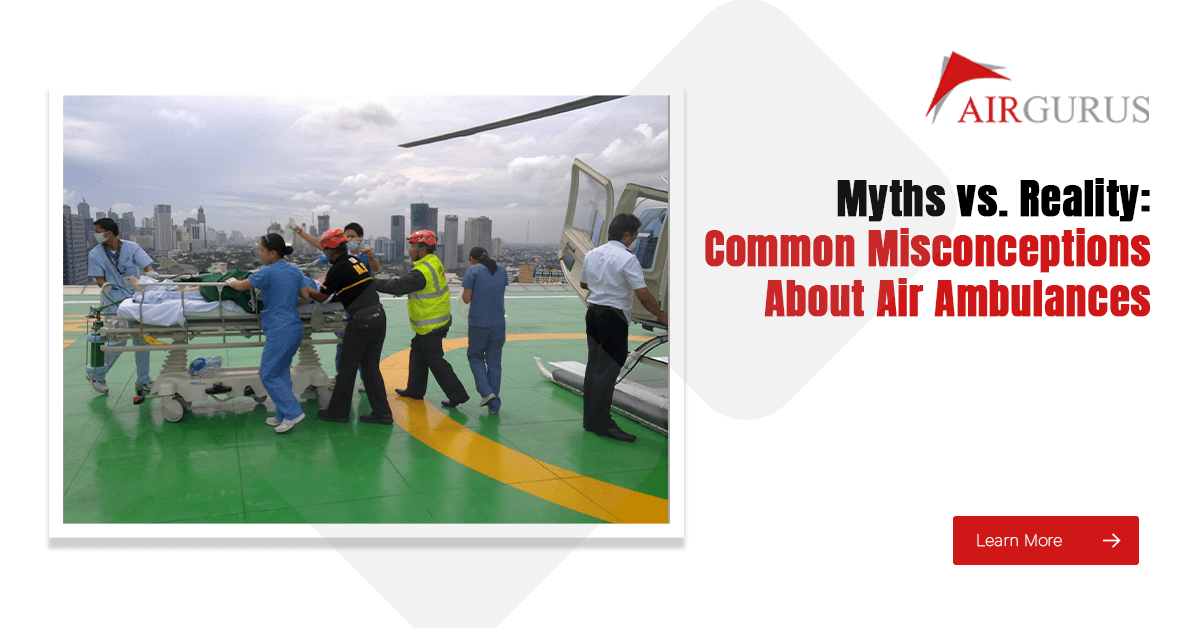
In critical medical situations, misinformation can lead to delays in urgent decision-making and potentially place patients at greater risk. Common air ambulance myths can create confusion about how air medical transport works, when it is needed, and the level of care these services provide.
The World Health Organization (WHO) emphasizes the importance of timely emergency care for conditions that require immediate medical attention. Understanding the facts behind air ambulance myths helps healthcare providers, patients, and families make informed decisions during emergencies when every minute matters.
Common Air Ambulance Myths
Do They Only Operate in Major Cities?
Many people believe advanced medical flights only operate in major cities. In reality, life flights in the Philippines are specifically designed to reach patients in remote and underserved areas. Whether it involves an air ambulance in Palawan, an emergency transfer in Cebu, or a medical evacuation in Dumaguete, professional crews regularly fly to regional airports to transport patients to larger hospitals with advanced medical care.
Do They Only Operate in Major Cities?
Some assume commercial airlines can provide the same level of support as a medical aircraft. Commercial flights cannot provide the specialized care critically ill patients need, including ventilators, cardiac monitoring, and intensive medical support.
Common Air Ambulance Myths: Do They Only Operate in Major Cities?
Rescue helicopters are also essential for reaching patients in isolated islands, mountainous regions, and areas without nearby airport runways. Medical helicopters land closer to patients in highways, open fields, and rural clinics, speeding up emergency evacuations.
Myth: Air Ambulances Are Only For Extreme Emergencies
A common misconception is that air ambulances are only used during major disasters or extreme emergencies. Medical flights also support inter-hospital transfers, patient repatriation, organ transport, and access to specialized treatment. Air medical transport plays an important role in both emergency response and planned critical care transfers.
Myth: Medical Flights Cannot Transport Patients Internationally
Professional international medevac services can safely transport patients to hospitals abroad for specialized treatment or surgery. Providers coordinate the entire process, including medical clearances, flight logistics, travel documentation, and continuous in-flight care. Whether the destination is Singapore, Japan, Korea, or China, patients can receive fully supervised bed-to-bed medical transport throughout the journey.
Final Thoughts
In emergency medical situations, having accurate information can make a significant difference in how quickly and safely a patient receives care. Understanding the realities of air medical transport helps families, healthcare providers, and decision-makers respond with greater confidence during critical moments.
By dispelling common misconceptions, patients can better recognize when air medical transport is necessary and how these services help save lives through fast, coordinated, and medically supervised care.
About Airgurus
Airgurus provides fast and reliable air medical service for emergencies, ensuring safe and efficient patient transport. Our CAAP and DOH compliant air ambulance team offers dependable air ambulance and medevac solutions, including ICU air ambulance care, rescue helicopters, and life flights for urgent situations. We manage both domestic and international medevac, coordinating with hospitals and healthcare professionals to ensure patients reach the right medical facilities across the Philippines and beyond. Whether it’s city-to-city transfers or reaching remote areas, Airgurus prioritizes safety, speed, and patient comfort. Call our air ambulance number +63 9178857911 today to learn more about how our air medical transport services can support your emergency needs.
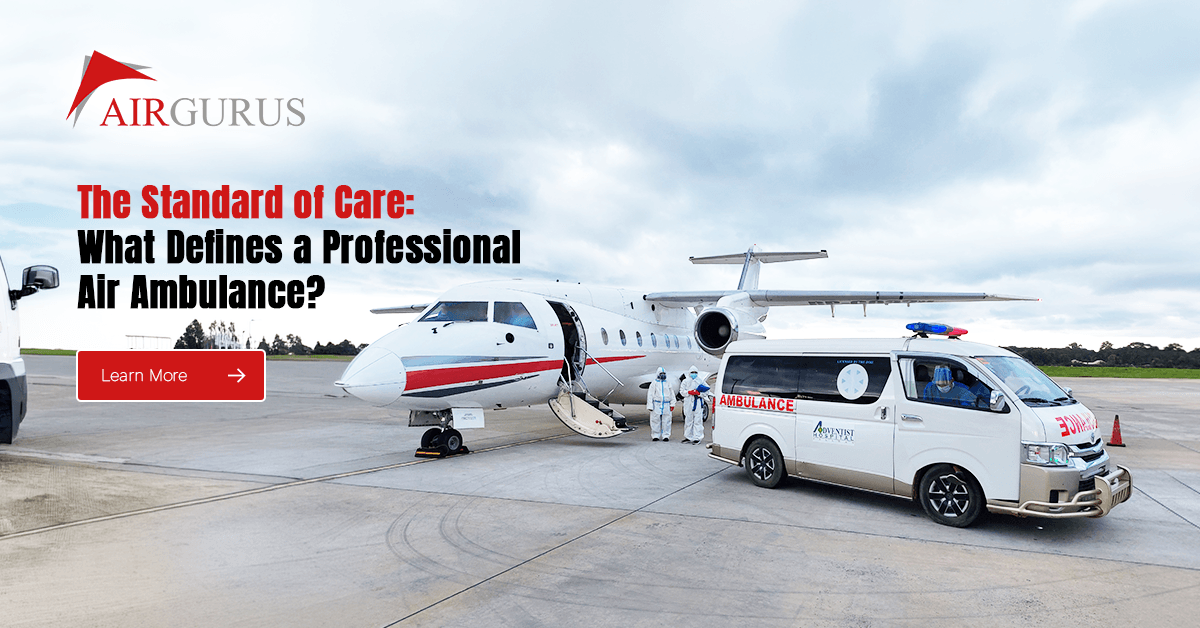
When an emergency requires medical transport, understanding what qualifies as a professional air ambulance service is vital for patient safety. Air medical transport involves far more than rapid response times, it requires strict clinical standards, regulatory compliance, advanced medical capabilities, and a highly coordinated operational framework.
Professional Air Ambulance Service and Patient Safety
In the aviation and healthcare sectors, compliance is an important part of safety. A reputable operator must utilize a CAAP and DOH compliant air ambulance. This ensures that the provider meets aviation safety requirements set by the Civil Aviation Authority of the Philippines (CAAP) while also fulfilling applicable healthcare standards.
Families and medical institutions can verify these credentials to ensure the aircraft, equipment, and flight crew meet safety requirements.
Dedicated Medical Aircraft Configurations
Professional air ambulance aircraft are specifically configured for medical transport and critical care support. Unlike temporary or makeshift medical setups, these aircraft feature dedicated medical interiors designed to accommodate advanced life-support equipment and continuous patient monitoring during flight.
Depending on the patient’s condition, onboard systems may include:
Transport ventilators
Cardiac and vital sign monitors
Infusion pump systems
Oxygen delivery equipment
Emergency medications and trauma supplies
These capabilities are especially important for ICU-level patient transfers and international medevac where uninterrupted care is essential.
Expert Medical Flight Teams
Advanced equipment alone is not enough to ensure safe patient transport. Professional air ambulance operations rely on highly trained medical flight teams capable of managing critical care emergencies throughout the journey. Depending on the patient’s condition, the onboard team may include flight physicians, critical care nurses, paramedics, and respiratory therapists experienced in emergency and in-flight medicine.
These specialists continuously monitor patients and operate advanced life-support equipment during transport. They also administer emergency medications and respond quickly to changes in a patient’s condition. Their expertise is especially important during ICU transfers, rescue helicopter evacuations, and long-distance international medevac missions.
24/7 Dispatch and Coordinated Logistics
Emergency medical transport requires seamless coordination between multiple teams and agencies. Professional air medical service providers operate 24/7 dispatch systems capable of managing every stage of the transfer process, including:
Airport and flight clearances
Ground ambulance coordination
Hospital endorsements and acceptance
Flight scheduling and routing
International medical transport documentation
This level of operational coordination is critical during both domestic medevac missions and international patient transfers.
Transparent Communication and Pricing
In emergency situations, clear communication is essential for patients and their families. Professional life flight providers maintain transparency throughout the transport process, particularly when discussing logistics, medical requirements, and air ambulance costs.
Because pricing can vary depending on the distance, aircraft type, level of medical care required, and operational complexity, reputable providers offer detailed and upfront cost breakdowns without hidden fees.
What Makes a Professional Air Ambulance?
In emergency situations, the quality of an air medical service can directly impact patient outcomes. From regulatory compliance and advanced medical equipment to operational coordination and trained personnel, every component of the transport process must work together seamlessly.
As demand for life flights in the Philippines and international medical evacuation continues to grow, choosing a provider that prioritizes safety, professionalism, and medical excellence remains essential.
Choosing a Professional Air Ambulance
A professional air ambulance service is built on more than rapid response times. It requires strict safety standards, advanced medical equipment, expert flight medical teams, and reliable operational coordination. Just as important is transparent communication, especially when it comes to pricing, so families can focus on safe patient transport without added stress or concern over costs during critical situations.
From CAAP and DOH compliant operations to ICU-equipped aircraft and 24/7 medical logistics, every component plays a vital role in patient care. Trusted providers such as Airgurus help coordinate safe and medically supervised medevac services for domestic transfers, rescue helicopter evacuations, and international patient transport.
About Airgurus
Airgurus provides fast and reliable air medical service for emergencies, ensuring safe and efficient patient transport. Our CAAP and DOH compliant air ambulance team offers dependable air ambulance and medevac solutions, including ICU air ambulance care, rescue helicopters, and life flights for urgent situations. We manage both domestic and international medevac, coordinating with hospitals and healthcare professionals to ensure patients reach the right medical facilities across the Philippines and beyond. Whether it’s city-to-city transfers or reaching remote areas, Airgurus prioritizes safety, speed, and patient comfort. Call our air ambulance number +63 9178857911 today to learn more about how our air medical transport services can support your emergency needs.