The Philippines’ geography can make access to medical care more challenging, particularly when specialized treatment is not available in a patient’s current location. Air ambulance Philippines services can help patients travel between cities, islands, and healthcare facilities when conventional transportation is not suitable. Patients and families can also refer to PhilHealth-accredited health facilities when identifying available healthcare providers.
Medical air transport is arranged according to each patient’s specific needs. This can include onboard medical personnel and equipment, ground transportation, and coordination with the healthcare facilities involved in the transfer.
What Is an Air Ambulance?
An air ambulance transports patients who need medical care or monitoring during their journey.
Unlike a regular commercial flight, an air ambulance transfer is planned around the patient’s medical condition. The type of medical support required during the flight depends on the patient’s condition and may include specialized equipment and trained medical staff.
Ground ambulance teams can transport the patient to the aircraft and from the airport to the receiving hospital.
When Might a Patient Need a Life Flight?
An air ambulance may be an option when a patient’s condition or location makes conventional transportation unsuitable. Medical air transport may be considered when:
A patient needs to travel between hospitals.
Specialized treatment is available in another city or region
A patient is located in a remote or island community
The patient requires medical monitoring during transportation
The patient’s condition may make ground or sea transportation impractical.
A patient needs to travel between the Philippines and another country for medical care
For patients in the Philippines, the country’s geography can make long-distance medical transfers more complicated. Travel between islands or from remote communities to major healthcare centers may involve multiple transportation arrangements.
The patient’s attending physician and medical team should determine whether air transportation is appropriate before arranging the transfer.
How Does an Air Ambulance Transfer Work?
Medical evacuation requires careful planning from the initial medical assessment through the patient’s arrival at the receiving facility.
Medical Assessment and Planning
The attending medical team reviews the patient’s medical condition to determine whether air transportation is appropriate and what level of medical support the patient may require.
Coordination With Healthcare Facilities
The air ambulance provider works with both the patient’s current healthcare team and the receiving facility to coordinate the transfer. This helps ensure that the medical arrangements are suited to the patient’s needs and that the receiving hospital is ready to continue care upon arrival.
Ground Transportation
The medical team can arrange ground ambulance transport to the aircraft. After landing, they can arrange transport to the receiving hospital.
Medical Care During the Flight
During the flight, the medical team provides the level of monitoring and care appropriate to the patient’s condition. The equipment and personnel required will depend on the patient’s medical needs.
Handover at the Receiving Facility
Upon arrival, the patient is transferred to the receiving medical team. A clinical handover provides information about the patient’s condition, treatment, medications, and care provided during the journey so that the receiving team can continue appropriate care.
What to Consider When Choosing an Air Ambulance Provider
When arranging an air ambulance, families and healthcare providers should consider the provider’s ability to meet the patient’s specific medical and transportation requirements.
Medical Capabilities
Choose a provider that can meet the patient’s specific medical needs throughout the transfer.
Aircraft and Equipment
The aircraft and onboard setup should match the patient’s medical needs and the requirements of the planned flight.
Medical Coordination
The provider should be able to coordinate the medical and logistical requirements of the transfer, including communication with healthcare teams, ground transportation providers, and flight operations.
Receiving Hospital
The provider should be able to coordinate with the receiving facility and confirm that the appropriate team and resources are available when the patient arrives.
Flight and Operational Requirements
Air ambulance operations need to comply with applicable aviation and operational requirements in the Philippines. The provider should have the appropriate arrangements in place for the planned route and transfer.
Airgurus Air Ambulance Services
Airgurus provides air ambulance and medical evacuation services for patients requiring medically supervised transportation across the Philippines and to selected destinations in Asia. Each transfer is coordinated according to the patient’s medical condition, destination, and required level of care.
From Cebu and Manila to Davao, Palawan, and other locations across the country, Airgurus coordinates the medical and logistical requirements of each transfer, including ground transportation, flight arrangements, medical support, and coordination with healthcare facilities.
Need an Air Ambulance in the Philippines?
When a patient needs medically supervised transportation between cities, islands, or healthcare facilities, Airgurus coordinates the appropriate medical and logistical arrangements based on the patient’s condition and required level of care.
For air ambulance and medical evacuation assistance, contact Airgurus at +63 917 885 7911.
About Airgurus
Airgurus provides fast and reliable air medical service for emergencies, ensuring safe and efficient patient transport. Our CAAP and DOH compliant air ambulance team offers dependable air ambulance and medevac solutions, including ICU air ambulance care, rescue helicopters, and life flights for urgent situations. We manage both domestic and international medevac, coordinating with hospitals and healthcare professionals to ensure patients reach the right medical facilities across the Philippines and beyond. Whether it’s city-to-city transfers or reaching remote areas, Airgurus prioritizes safety, speed, and patient comfort. Call our air ambulance number +63 9178857911 today to learn more about how our air medical transport services can support your emergency needs.
When a patient in Cebu needs specialized medical care, an air ambulance Cebu provider can help coordinate a medically supervised transfer when conventional transportation is not suitable. This can be especially important when the patient needs to be transferred to another city, comes from a nearby island, or requires continuous medical monitoring during transport.
Cebu is home to major healthcare facilities serving patients in the province and across Central Visayas. The region includes Cebu, Bohol, Negros Oriental, and Siquijor, with several major hospitals and healthcare facilities located in Cebu.
An air ambulance in Cebu provides medically supervised transfers to Manila and other destinations when specialized care is needed.
Why Is Cebu Important for Medical Transfers?
Cebu plays an important role in healthcare delivery in the Visayas, with both government and private hospitals providing specialized medical services to patients across the province and neighboring areas. Among the major government hospitals in Cebu are Vicente Sotto Memorial Medical Center, Cebu South Medical Center, and Eversley Childs Sanitarium and General Hospital. The province is also home to major private hospitals, including Chong Hua Hospital, Cebu Doctors’ University Hospital, and Perpetual Soccour Hospital.
Healthcare facilities in Cebu also provide a range of specialized services. For example, Cebu City Medical Center lists services that include pediatric intensive care, intensive coronary care, cerebrovascular care, neurology, pulmonology, neonatology, and hematology/oncology.
This makes Cebu an important destination for patients who may need access to medical services that are not available in smaller or more remote communities.
For patients coming from other islands or provinces, however, reaching Cebu can involve multiple transportation connections. An air ambulance may provide an alternative when conventional transport is difficult.
When Might a Patient Need an Air Ambulance in Cebu?
Not every medical transfer requires an air ambulance. The appropriate mode of transportation depends on the patient’s condition, distance, available routes, weather, and level of medical support required.
Air ambulance transport may be considered when:
The Patient Needs Time-Sensitive Medical Care
Some patients need to reach another healthcare facility as quickly as reasonably possible. If specialized care is unavailable, reducing travel time may help facilitate the transfer.
The Destination Is Far From the Present Location
Long-distance transfers can be particularly challenging for patients who need medical supervision during the journey. An air ambulance can connect patients to healthcare facilities in Cebu, Manila, or other destinations.
The Patient Is Located on an Island or Remote Area
Patients in remote communities or nearby islands may face longer and more complicated journeys to reach hospitals with the appropriate level of care. When geography, sea travel, or limited transportation options make conventional transfers difficult, an air ambulance can provide a medically supervised alternative for reaching the appropriate healthcare facility.
The Patient Requires Medical Monitoring During Transport
When conventional transport is difficult, an air ambulance can provide a medically supervised alternative.
The level of support depends on the patient’s condition. This may include monitoring, oxygen therapy, medication administration, or other forms of medical care required during the transfer.
Air Ambulance Transfers From the Visayas to Cebu
Cebu serves as a regional healthcare hub for patients across the Visayas.
Patients may be referred from local hospitals to Cebu for specialized care. For remote patients, reaching Cebu may involve long land and sea journeys.
For patients who can safely travel by conventional means, a ground or commercial transport option may be appropriate. However, when the journey is too long, difficult, or medically unsuitable, an air ambulance can provide a medically supervised alternative.
The transfer requires coordination between hospitals, the air medical team, ground ambulance providers, and the airport.
Air Ambulance Cebu to Manila
Some patients in Cebu may need specialized care unavailable locally and require transfer to Manila or another major healthcare center.
The transfer involves more than arranging a flight and is planned around the patient’s condition and required medical support.
Depending on the case, coordination may include:
Medical assessment and transport planning
Coordination with the referring hospital
Ground ambulance arrangements
Aircraft and medical team requirements
Communication with the receiving hospital
In-flight medical monitoring and care
Patient handover upon arrival
The specific arrangements will depend on the patient’s condition, required level of care, destination, aircraft availability, and receiving facility requirements.
Need an Air Ambulance in Cebu?
For patients in Cebu and surrounding areas, getting to the right medical facility can sometimes involve significant distance and logistical challenges. An air ambulance can provide a medically supervised option when conventional transportation is not suitable for the patient’s condition or journey.
Airgurus provides air ambulance and medevac services across the Philippines and selected Asian destinations, based on each patient’s medical and transport needs.
Whether traveling to Cebu, Manila, or other destinations, Airgurus coordinates the medical and logistical aspects of each transfer.
For air ambulance and medical evacuation assistance, contact Airgurus at +63 917 885 7911.
About Airgurus
Airgurus provides fast and reliable air medical service for emergencies, ensuring safe and efficient patient transport. Our CAAP and DOH compliant air ambulance team offers dependable air ambulance and medevac solutions, including ICU air ambulance care, rescue helicopters, and life flights for urgent situations. We manage both domestic and international medevac, coordinating with hospitals and healthcare professionals to ensure patients reach the right medical facilities across the Philippines and beyond. Whether it’s city-to-city transfers or reaching remote areas, Airgurus prioritizes safety, speed, and patient comfort. Call our air ambulance number +63 9178857911 today to learn more about how our air medical transport services can support your emergency needs.
Palawan is known for its limestone cliffs, islands, and remote coastal communities that attract both local and international travelers. But the same geography that makes the province unique can also make access to healthcare more challenging. Many communities are spread across the mainland and surrounding islands. Air ambulance services can help patients reach medical facilities with the appropriate level of care.
When roads, sea routes, distance, or weather limit access to medical care, air medical transport can provide an alternative. This can help patients reach appropriate medical facilities when conventional routes are difficult to use. But why is this particularly important in Palawan, and how can air medical transport help address these challenges?
Why Is Healthcare Access Challenging in Palawan?
Palawan has communities across remote municipalities and islands. These areas can be difficult to reach from major healthcare centers. For some residents, accessing specialized medical services may involve hours of travel by road or sea.
For patients who need specialized or urgent care, these geographic barriers can make reaching the right hospital even more difficult. Long journeys by road or sea may also delay treatment when patients require timely medical attention.
How Can an Air Ambulance Service Help?
For patients in remote areas, an air ambulance can provide an alternative to lengthy road or sea journeys. Medical teams can transfer patients by air to a healthcare facility equipped to manage their condition. This reduces the need to rely entirely on conventional transportation.
This can be particularly valuable when the patient needs specialized or higher-level care that is not available locally. Depending on the patient’s condition and location, an air medical transfer may connect a remote community or local healthcare facility with a larger medical center in Palawan or elsewhere in the Philippines.
Bridging Healthcare Gaps With Air Ambulance Services
For patients in remote areas of Palawan, geographic distance can become a significant healthcare barrier. Access to the right medical facility may depend not only on where a patient is located, but also on whether roads, sea routes, and other transportation options are available at the time.
Airgurus provides air ambulance services in Palawan, supporting patients who require safe and medically supervised transport. With trained medical professionals, appropriate aircraft, and coordinated hospital transfers, Airgurus helps connect patients with the medical facilities and level of care they need.
Whether for an emergency medevac, hospital-to-hospital transfer, or critical-care transport, Airgurus is committed to providing dependable air medical service across the Philippines when timely access to care matters most.
About Airgurus
Airgurus provides fast and reliable air medical service for emergencies, ensuring safe and efficient patient transport. Our CAAP and DOH compliant air ambulance team offers dependable air ambulance and medevac solutions, including ICU air ambulance care, rescue helicopters, and life flights for urgent situations. We manage both domestic and international medevac, coordinating with hospitals and healthcare professionals to ensure patients reach the right medical facilities across the Philippines and beyond. Whether it’s city-to-city transfers or reaching remote areas, Airgurus prioritizes safety, speed, and patient comfort. Call our air ambulance number +63 9178857911 today to learn more about how our air medical transport services can support your emergency needs.
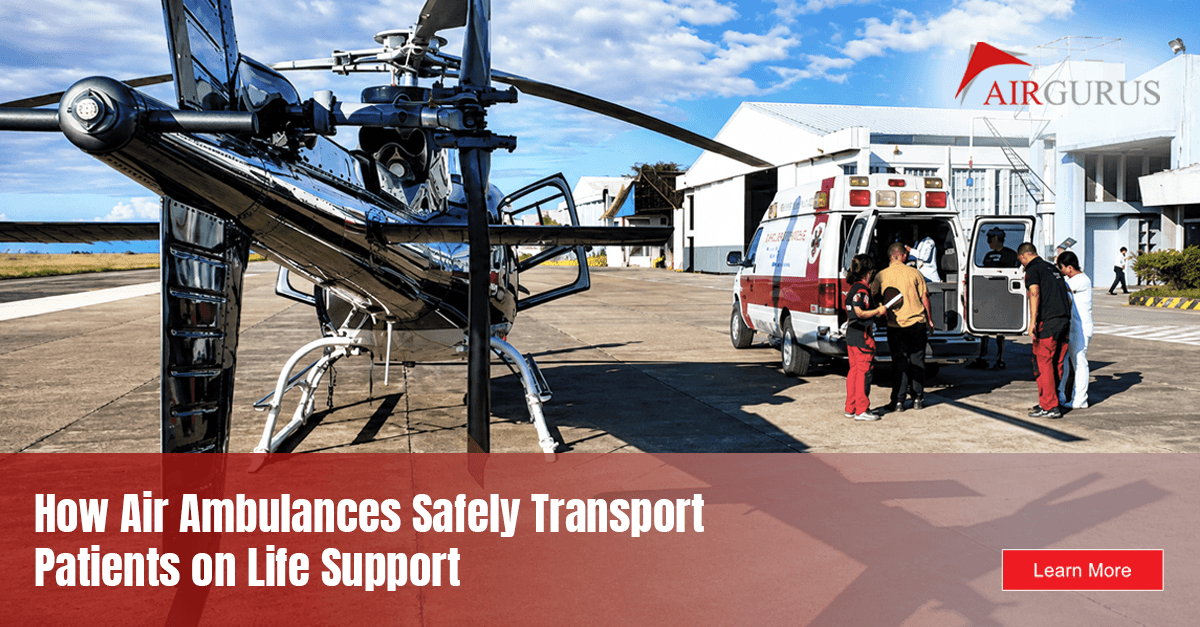
Moving a critically ill patient is never as simple as getting from one hospital to another. For patients on life support, air ambulance transport allows the medical team to continue essential care throughout the transfer. A ventilated patient cannot simply be disconnected from their equipment. Medications and monitoring may also need to continue without interruption.
An air ambulance makes it possible to move these patients while keeping essential medical support in place. But how is this done safely in an aircraft? The medical team prepares the patient and secures critical equipment before departure. They also maintain care during the flight and complete the hospital handover after landing.
Before Air Ambulance Transport: Preparing the Patient and Equipment
Safety begins before the aircraft takes off. The medical team reviews the patient’s condition, current treatment, medications, and level of life support to determine what will be required throughout the transfer. The patient is stabilized as much as possible before departure, while essential equipment and medications are prepared and checked.
Patients requiring mechanical ventilation, oxygen therapy, continuous medication, or cardiac monitoring need appropriate equipment and sufficient supplies throughout the flight. The air medical team prepares these resources before departure. Ventilators, monitors, infusion pumps, and other equipment are secured for use during transport.
The referring hospital, air medical team, and receiving facility also coordinate the transfer so the patient’s care can continue smoothly from one facility to the next.
During the Flight: Maintaining Continuous Critical Care
Once airborne, life support continues without interruption. Depending on the patient’s condition, an ICU air ambulance may provide mechanical ventilation, oxygen therapy, cardiac monitoring, and medication infusion throughout the flight.
A transport ventilator can provide controlled respiratory support for patients who cannot breathe adequately on their own. The medical team monitors oxygen levels and respiratory status and adjusts support when necessary.
Continuous monitoring may include ECG, blood pressure, oxygen saturation, respiratory rate, and other vital signs. This allows the medical team to identify changes in the patient’s condition and respond promptly.
Patients who require continuous intravenous medications can also receive them through infusion pumps during the flight. The medical team manages medication doses, fluids, and other treatments according to the patient’s needs.
After the Flight: Safe Transfer to the Receiving Hospital
Medical care does not end when the aircraft lands. The medical team transfers the patient to ground transportation or directly to the receiving facility, depending on the circumstances. They maintain the necessary life support throughout the transfer.
The air medical team provides a clinical handover to the receiving healthcare team, including information about the patient’s condition, medications, treatments provided, and any changes during the journey. Clear communication during patient transfers helps the receiving team continue care safely and without unnecessary delays. WHO Prehospital Emergency Care Toolkit
For patients on life support, the safety of an air medical transfer depends on maintaining appropriate care before departure, throughout the flight, and after landing.
Air Ambulance Transport: Safe Critical Care From Departure to Arrival
Transporting a patient on life support requires more than an aircraft equipped for medical transport. It requires a coordinated team capable of maintaining critical care throughout the journey and responding to the patient’s changing needs.
Airgurus provides air ambulance, air medical, and medevac services for patients requiring medically supervised transport across the Philippines and selected destinations in Asia, including Korea, Japan, and China. With specialized equipment and trained medical teams, Airgurus coordinates each transfer according to the patient’s condition and required level of care.
Whether a patient needs an ICU air ambulance for a critical hospital transfer or medically supervised transport between regions, Airgurus helps ensure that essential care continues from one facility to the next.
When life support must continue, Airgurus brings critical care with the patient.
About Airgurus
Airgurus provides fast and reliable air medical service for emergencies, ensuring safe and efficient patient transport. Our CAAP and DOH compliant air ambulance team offers dependable air ambulance and medevac solutions, including ICU air ambulance care, rescue helicopters, and life flights for urgent situations. We manage both domestic and international medevac, coordinating with hospitals and healthcare professionals to ensure patients reach the right medical facilities across the Philippines and beyond. Whether it’s city-to-city transfers or reaching remote areas, Airgurus prioritizes safety, speed, and patient comfort. Call our air ambulance number +63 9178857911 today to learn more about how our air medical transport services can support your emergency needs.
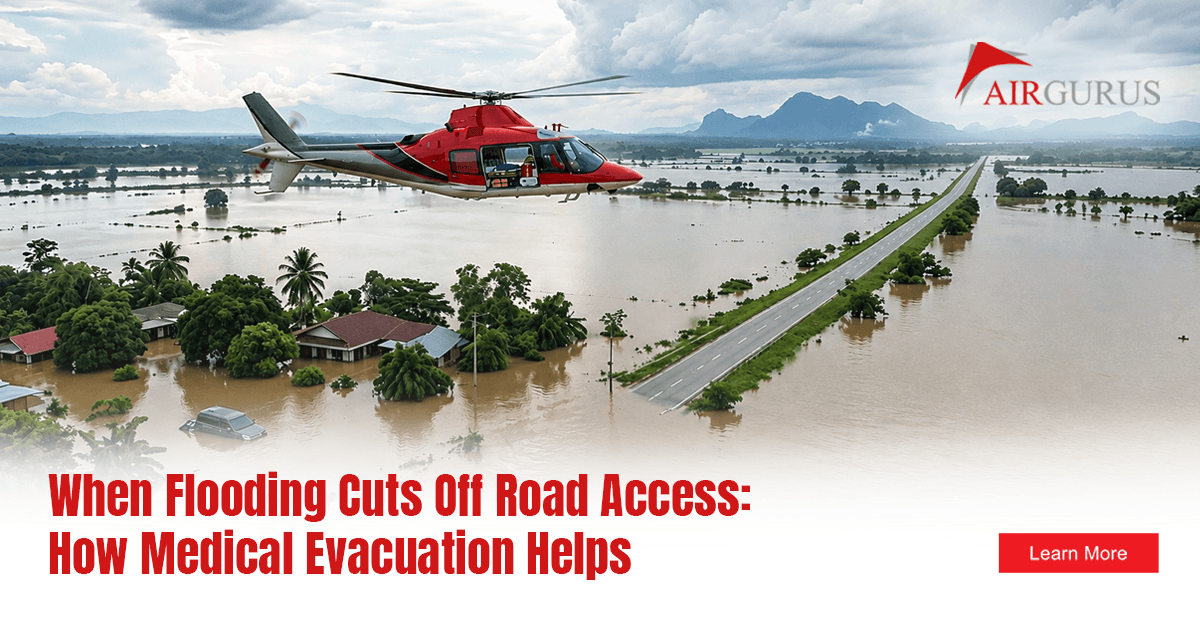
Emergency medical evacuation can provide a critical option when typhoons and flooding disrupt access to healthcare in the Philippines. Heavy rain, landslides, and rising floodwaters can cut off roads, damage bridges, and disrupt ferry routes, leaving patients in remote communities with limited access to hospitals. For someone experiencing a medical emergency, waiting for roads to reopen may not be an option.
Patients with serious injuries, cardiac emergencies, pregnancy complications, or other time-sensitive conditions may need to reach a hospital with specialized care while normal transportation routes remain inaccessible. In these situations, medical evacuation can help bridge the distance between isolated communities and facilities that can provide the care they need.
How Emergency Medical Evacuation Works During Natural Disasters
Flooding and severe weather can make ground transportation difficult or impossible. Air medical transport can provide an alternative way to reach an appropriate medical facility. The patient may travel by helicopter or fixed-wing air ambulance. The choice depends on the location, distance, aircraft requirements, and medical condition.
Reaching Patients in Isolated Areas
Flooding and landslides can make roads and bridges impassable. This can prevent conventional ambulances from reaching patients or transporting them to another facility. Medevac can help overcome these geographic barriers when a safe and suitable landing area or airport is available.
The transport plan depends on the patient’s location, weather conditions, aircraft availability, and operational requirements. Medical and aviation teams coordinate the evacuation. They determine the safest way to reach the patient and transfer them to the appropriate healthcare facility.
Continuing Critical Care During Flight
An air ambulance is more than a faster way to travel. For patients with serious medical conditions, it provides a controlled environment for medical care. Medical professionals can continue monitoring and supporting the patient throughout the journey.
Depending on the patient’s condition, the aircraft may carry cardiac monitors, oxygen systems, ventilators, and infusion pumps. A trained medical team provides the required level of care during transport and monitors the patient throughout the flight.
Connecting Remote Communities to Specialized Care
The Philippines’ geography creates additional challenges during disasters. Flooding can isolate entire communities, while disrupted roads and sea routes can make transfers between islands and provinces more difficult.
Medevac can help connect patients from affected or remote areas to hospitals with the appropriate level of care. Depending on the patient’s needs and available routes, transfers may originate from areas such as Palawan, Cebu, or Dumaguete. Medical teams can then transfer patients to Manila or other locations with major medical centers.
For patients who require specialized treatment, the goal is not simply to get them out of an isolated area. It is to help them reach the appropriate medical facility as safely and efficiently as possible.
Emergency Medical Evacuation: Be Prepared When Roads Are No Longer an Option
Severe weather can change access to medical care within hours. PAGASA recommends taking precautions and moving to a safe area before floodwaters cut off access. For patients in isolated communities, having a plan for emergency medevac can make a critical difference when roads, bridges, and other transportation routes are disrupted.For patients in isolated communities, an emergency medevac plan can provide critical support when roads, bridges, and other transportation routes become disrupted.
When choosing a provider, make sure you are working with a CAAP and DOH compliant air ambulance operator with the appropriate aircraft, medical equipment, and trained medical personnel. It’s also important to understand that air ambulance cost varies depending on the patient’s condition, flight distance, aircraft type, medical team, equipment, and ground transportation. The provider typically conducts a case assessment before giving an accurate quotation.
During a disaster, having an air ambulance number readily available can also help reduce delays. Save Airgurus at +63 917 885 7911 so you have a direct point of contact when urgent medical transport is needed.
Airgurus provides air ambulance and medical evacuation services across the Philippines and select destinations in Asia, helping patients access appropriate medical facilities when conventional transportation routes are disrupted. With 24/7 emergency support and coordinated medical transport, Airgurus is ready to help when distance and disaster stand between patients and the care they need.
When roads are no longer an option, Airgurus helps bridge the distance to care.
About Airgurus
Airgurus provides fast and reliable air medical service for emergencies, ensuring safe and efficient patient transport. Our CAAP and DOH compliant air ambulance team offers dependable air ambulance and medevac solutions, including ICU air ambulance care, rescue helicopters, and life flights for urgent situations. We manage both domestic and international medevac, coordinating with hospitals and healthcare professionals to ensure patients reach the right medical facilities across the Philippines and beyond. Whether it’s city-to-city transfers or reaching remote areas, Airgurus prioritizes safety, speed, and patient comfort. Call our air ambulance number +63 9178857911 today to learn more about how our air medical transport services can support your emergency needs.