

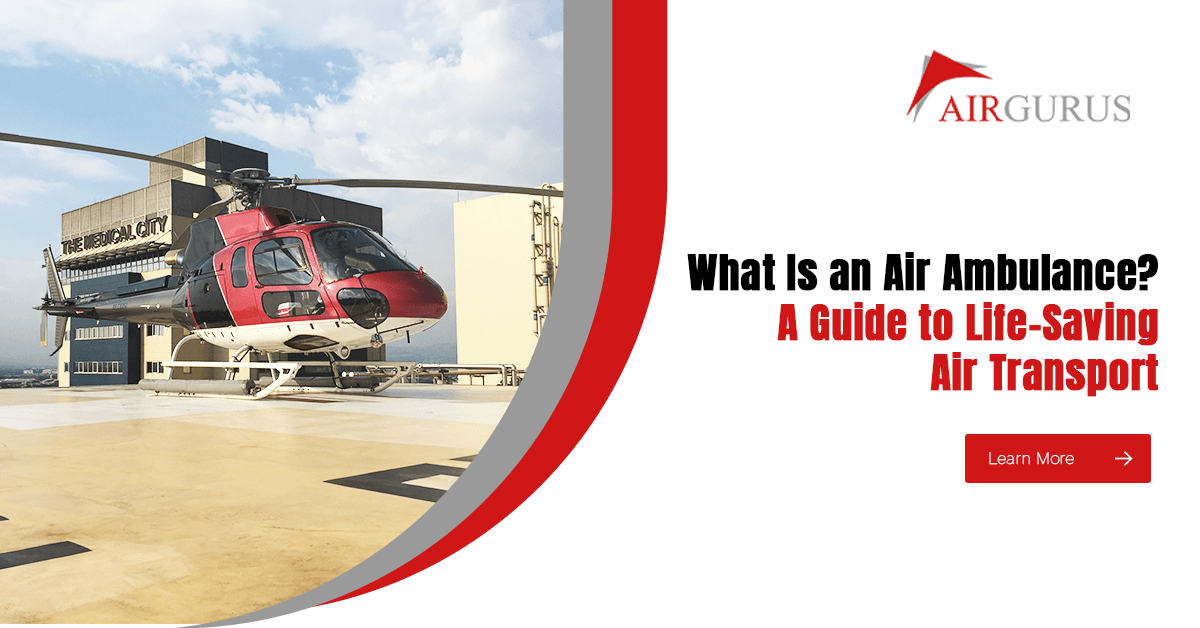
What Is an Air Ambulance? A Guide to Life-Saving Air Transport
When emergencies strike, time becomes critical. In situations where roads are congested, distances are far, or locations are difficult to access, traditional transport can fall short. Air ambulance services provide fast, medically supervised transport when patients need urgent care.
Air ambulances use advanced medical technology and skilled medical teams to provide continuous care during the journey. This blog explains air ambulance services, when patients need them, and how they support emergency medical care.
What Is an Air Ambulance?
An air ambulance uses a specially equipped aircraft, such as a plane or helicopter, to transport patients who need urgent medical attention. These aircraft function as flying intensive care units, with trained medical professionals and life-saving equipment onboard.
Unlike standard transportation, an air medical service ensures that patients receive continuous care while in transit. Medical teams use these services for accident evacuations, hospital transfers, and emergency relocation to better-equipped facilities.
When Is an Air Ambulance Needed?
Medical teams use air ambulances for life-threatening emergencies, including severe trauma, cardiac events, and cases involving hard-to-reach areas. The World Health Organization (WHO) identifies conditions such as injuries, heart attacks, and strokes as medical emergencies that require timely care.
In the Philippines, air ambulance and rescue helicopter services help patients in remote or island areas reach specialized hospitals. They also support inter-hospital transfers when advanced treatment is only available in key regions.
What Services Are Included in an Air Ambulance?
An ICU air ambulance carries advanced medical equipment, including ventilators, cardiac monitors, and emergency medications. This equipment allows medical teams to provide continuous critical care during the flight.
Many providers operate as CAAP- and DOH-compliant air ambulance operators. Services may include bedside-to-bedside transfers, medical escorts, and coordination with receiving hospitals.
Air ambulance costs can vary based on distance, medical needs, and aircraft type. The service provides speed, safety, and medical care during emergencies.
Conclusion
Air ambulances play a crucial role in modern emergency response. They provide fast, reliable, and medically advanced transport when every second counts. Whether for local emergencies or international transfers, these services help patients receive the care they need without unnecessary delays.
For dependable air medical transport, contact Airgurus for safe and efficient care.
About Airgurus
Airgurus provides fast and reliable air medical service for emergencies, ensuring safe and efficient patient transport. Our CAAP and DOH compliant air ambulance team offers dependable air ambulance and medevac solutions, including ICU air ambulance care, rescue helicopters, and life flights for urgent situations. We manage both domestic and international medevac, coordinating with hospitals and healthcare professionals to ensure patients reach the right medical facilities across the Philippines and beyond. Whether it’s city-to-city transfers or reaching remote areas, Airgurus prioritizes safety, speed, and patient comfort. Call our air ambulance number +63 9178857911 today to learn more about how our air medical transport services can support your emergency needs.
Tags: air ambulance, air ambulance cebu, air ambulance company philippines, air ambulance dumaguete, air ambulance in china, air ambulance in singapore, air ambulance japan, air ambulance korea, Air Ambulance Manila, air ambulance palawan, Air Ambulance Philippines, ICU air ambulance, international medevac, Medevac Philippines, medical air transport philippines