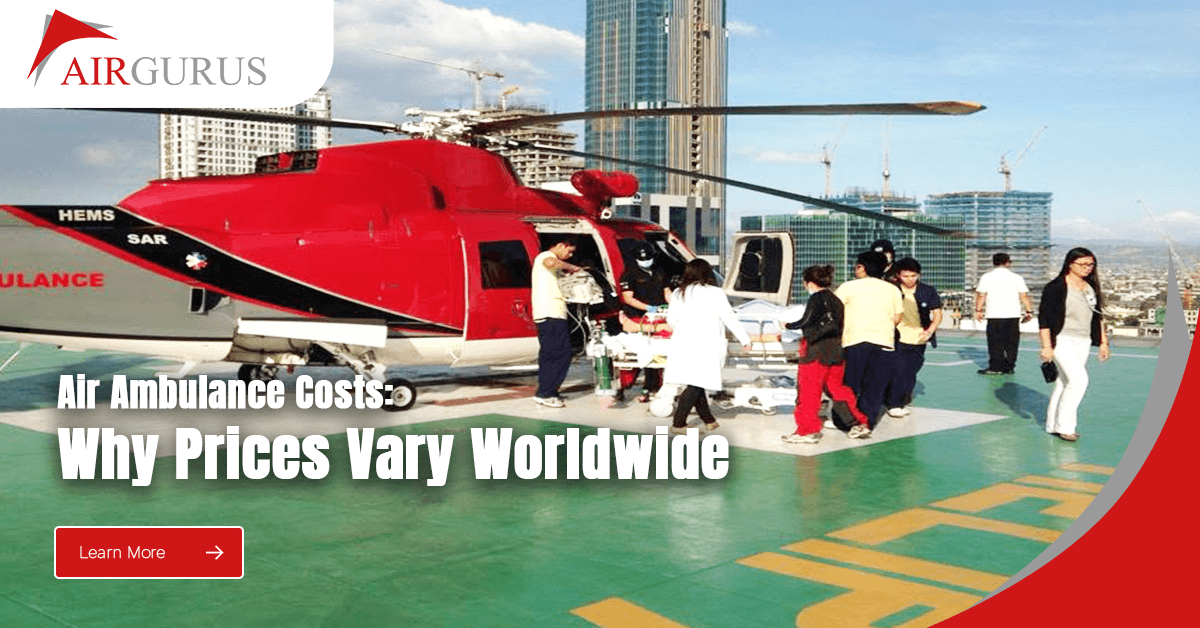
Air ambulancecosts can vary depending on the patient’s medical needs, flight distance, destination, and level of care required. When a patient requires urgent transfer to a specialized hospital, an air ambulance provides safe, medically supervised transport over long distances. Whether it’s a domestic transfer within the Philippines, an international medevac, or one of the many life flights carried out every day, understanding the factors that affect air ambulance costs can help patients and families plan for medical transport.
Flight Distance and Destination
One of the biggest factors affecting air ambulance costs is the distance between the patient’s location and the receiving hospital. Longer flights require more fuel, extended flight hours, additional crew time, and greater operational planning.
The destination can also affect the complexity of the transfer. Flights between major cities are often simpler to arrange than medical evacuations to remote islands, mountainous regions, or countries with additional aviation requirements. Rescue helicopters may be used for short-distance evacuations before transferring patients to fixed-wing aircraft for longer flights.
Domestic vs. International Medevac
International and domestic medical transport differ significantly in terms of planning and logistics.
Domestic transfers typically involve coordination within one country’s healthcare and aviation systems. In contrast, an international medevac requires coordination between multiple hospitals, aviation authorities, and government agencies. Providers may need to secure overflight and landing permits, prepare customs and immigration documentation, and comply with international aviation requirements established by the International Civil Aviation Organization (ICAO).
These additional operational requirements can make international medical flights more resource-intensive, contributing to higher overall costs.
Air Ambulance Costs Vary by Country
Air ambulance costs vary significantly from one country to another.
Fuel prices, airport and landing fees, aircraft maintenance, insurance, hangar facilities, and crew costs differ across regions. Countries with higher aviation and healthcare operating expenses generally have higher air ambulance costs than those with lower operational overhead.
These regional differences explain why two air ambulance missions covering similar distances may have different pricing.
Aircraft Type and Medical Resource
Not every patient requires the same aircraft or level of onboard medical support.
Patients who are medically stable may only require a standard medical transport aircraft. However, critically ill patients often need an ICU air ambulance equipped with ventilators, cardiac monitors, infusion pumps, oxygen systems, and other advanced life-support equipment.
The aircraft type, medical equipment, and flight medical team can significantly affect the overall cost.
The Patient’s Medical Condition
A patient’s condition is one of the most important factors influencing pricing.
Some patients only require medical observation during transport, while others need continuous critical care throughout the flight. Depending on the patient’s needs, the onboard medical team may include flight physicians, critical care nurses, paramedics, or respiratory therapists.
More complex medical cases require additional personnel, specialized equipment, and closer monitoring. These factors can increase the overall cost of the mission.
Understanding Air Ambulance Costs
Air ambulance pricing reflects far more than the flight itself. Every mission is carefully planned around the patient’s medical condition, transport requirements, destination, and the level of care needed throughout the journey. Rather than a one-size-fits-all service, each medical flight is tailored to provide the safest and most appropriate transport solution.
At Airgurus, we provide air ambulance services with experienced medical teams and coordinated patient transport. We support domestic transfers and international medevac missions with timely, medically supervised care.
About Airgurus
Airgurus provides fast and reliable air medical service for emergencies, ensuring safe and efficient patient transport. Our CAAP and DOH compliant air ambulance team offers dependable air ambulance and medevac solutions, including ICU air ambulance care, rescue helicopters, and life flights for urgent situations. We manage both domestic and international medevac, coordinating with hospitals and healthcare professionals to ensure patients reach the right medical facilities across the Philippines and beyond. Whether it’s city-to-city transfers or reaching remote areas, Airgurus prioritizes safety, speed, and patient comfort. Call our air ambulance number +63 9178857911 today to learn more about how our air medical transport services can support your emergency needs.
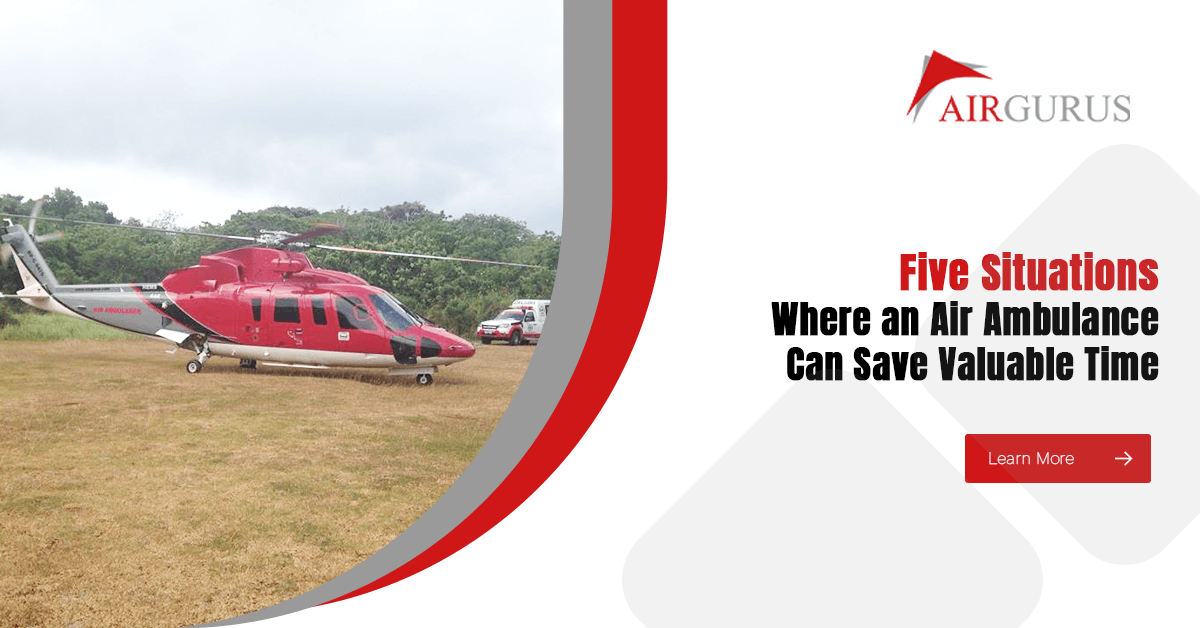
Every minute can make a difference during a medical emergency. While ground ambulances are the appropriate choice for many situations, some patients require faster transportation to reach specialized medical care. Air ambulance services provide a faster option when long distances, island geography, severe injuries, or critical medical conditions make traditional transport too slow.
In these situations, an air ambulance provides rapid, medically supervised transport to the appropriate healthcare facility. Patients may require an emergency medevac, a hospital-to-hospital transfer, or an international medical flight. Timely transport helps reduce delays in receiving specialized treatment.
Five Situations Where Air Ambulance Services Can Save Valuable Time
1. Medical Emergencies in Remote or Island Locations
The Philippines consists of more than 7,600 islands, making access to advanced healthcare facilities challenging for many communities. Patients living in remote provinces or island communities may need to be transferred to larger medical centers that offer specialized treatments unavailable in their local area at their local hospitals.
For example, patients requiring an air ambulance in Palawan, Cebu, or Dumaguete may need to be transported to tertiary hospitals in Manila or other major cities. These facilities have specialized medical teams and equipment needed for advanced care.
In these situations, every minute spent traveling by land or sea can delay access to critical treatment. By significantly reducing travel time, air ambulance services help connect patients with the appropriate healthcare facility more quickly, improving access to time-sensitive medical care when local resources are limited.
2. Time-Critical Conditions Such As Stroke or Heart Attack
Certain medical emergencies require treatment within a very limited time window, where delays can significantly affect patient outcomes.
Patients experiencing conditions such as:
Stroke
Heart attack
Severe trauma
Internal bleeding
Multiple injuries from accidents
These patients may benefit from rapid air transport to hospitals equipped with the necessary specialists and advanced medical facilities.
For critically ill patients, a specialized aircraft like the ICU air ambulance provides advanced life support, continuous patient monitoring, and specialized medical equipment throughout the flight. This allows experienced flight medical teams to begin or continue treatment while transporting the patient to the receiving hospital.
3. Air Ambulance Services for Hospital-to-Hospital Transfers
Not every hospital has specialized departments for complex procedures. These may include neurosurgery, cardiac care, neonatal intensive care, trauma surgery, and organ transplantation.
When patients require advanced treatment unavailable at their current hospital, a medically coordinated air transfer becomes essential.
A professional air medical service should provide bedside-to-bedside transportation that includes:
Ground ambulance transportation
An experienced flight medical team
Continuous patient monitoring during the flight
Safe transfer to the receiving hospital
Medically coordinated life flights reduce travel time between healthcare facilities, allowing patients to receive specialized treatment sooner. These services also help ensure continuous medical support throughout the transfer.
4. Severe Trauma and Major Accidents
Patients involved in major accidents, industrial incidents, or natural disasters may need immediate access to specialized trauma centers. These facilities have surgical teams and critical care capabilities for serious injuries.
When distance or difficult geography makes ground transportation impractical, an air ambulance provides a faster alternative. Medical teams can begin advanced treatment before takeoff and continue monitoring the patient throughout the flight, helping stabilize their condition while transporting them to a hospital equipped to manage severe injuries.
This rapid response can help when patients need emergency surgery or advanced trauma care that nearby facilities cannot provide.
5. Emergency Medical Repatriation Across Borders
Medical emergencies can occur while traveling abroad for business, education, or leisure. In some cases, patients become stable enough to travel but still require continuous medical supervision while returning home or transferring to a hospital with specialized services.
International medical repatriation may also be necessary when patients wish to continue treatment closer to their families or require specialized care unavailable in the country where the emergency occurred.
International medevac services manage the entire transfer process, including medical assessments, flight planning, hospital coordination, ground ambulance arrangements, customs requirements, and flight clearances. During the transfer, patients receive continuous care from experienced medical professionals to support their safety throughout the journey.
When Every Minute Counts: Choosing the Right Air Ambulance Service
When time, distance, or a patient’s condition makes conventional transportation unsuitable, choosing the right air medical transport provider becomes essential. A professionally coordinated air ambulance helps ensure patients receive continuous medical care while reaching the healthcare facility best equipped to meet their needs.
At Airgurus, we provide professional air medical services throughout the Philippines, including hospital-to-hospital transfers, and international medevac services. From bedside-to-bedside patient transfers to ICU-equipped air ambulance flights, our experienced medical and coordination teams manage every stage of the transfer with safety, compassion, and continuous patient care as our highest priorities.
As an experienced provider of CAAP and DOH-compliant air ambulance services, we coordinate safe and efficient patient transfers within the Philippines and across international destinations. Whether responding to emergencies in Palawan, Cebu, Dumaguete, Manila, or arranging cross-border medical transport, Airgurus is committed to helping patients reach the care they need as quickly and safely as possible.
About Airgurus
Airgurus provides fast and reliable air medical service for emergencies, ensuring safe and efficient patient transport. Our CAAP and DOH compliant air ambulance team offers dependable air ambulance and medevac solutions, including ICU air ambulance care, rescue helicopters, and life flights for urgent situations. We manage both domestic and international medevac, coordinating with hospitals and healthcare professionals to ensure patients reach the right medical facilities across the Philippines and beyond. Whether it’s city-to-city transfers or reaching remote areas, Airgurus prioritizes safety, speed, and patient comfort. Call our air ambulance number +63 9178857911 today to learn more about how our air medical transport services can support your emergency needs.
Cross-border air ambulance services provide medically supervised transport. They help patients who become seriously ill or injured while traveling between China and Southeast Asia. People regularly travel across the region for business, education, medical treatment, and leisure. When an unexpected medical emergency occurs abroad, patients may need urgent transport to an appropriate healthcare facility.
Strong travel, business, and healthcare connections between China and Southeast Asia have increased the need for international patient transfers. Hospitals may coordinate these transfers when patients require specialized treatment or continued medical care. When a patient is too ill or injured to travel on a commercial flight, an air ambulance can provide a medically supervised alternative with trained medical professionals and specialized equipment.
When Is a Cross-Border Air Ambulance Needed
Healthcare providers may recommend a cross-border air ambulance when a patient cannot safely travel on a commercial airline. It can also provide ongoing medical care during transport. These missions are commonly arranged for travelers, expatriates, overseas workers, international students, and business professionals who become seriously ill or injured abroad.
Healthcare providers may also recommend an international medevac when specialized treatment is unavailable at the patient’s current hospital. It may also be necessary when a patient needs to return home for continued medical care. An international medevac can also provide continuous medical supervision during the transfer.
Medical teams carefully plan each life flight based on the patient’s medical condition, destination, and clinical requirements. Air ambulance transfers may be arranged from China to the Philippines, Singapore, Malaysia, Thailand, Vietnam, or other Southeast Asian destinations. This helps ensure safe, timely, and medically supervised transport.
How Cross-Border Air Ambulance Flights Work
Every cross-border medevac begins with a comprehensive medical assessment. Flight medical professionals evaluate the patient’s condition and determine the level of care required during transport. They also identify the appropriate aircraft, medical equipment, medications, and healthcare specialists for the mission.
Every cross-border medevac begins with a comprehensive medical assessment. Flight medical professionals evaluate the patient’s condition and determine the level of care required during transport. They also identify the appropriate aircraft, medical equipment, medications, and healthcare specialists for the mission.
Throughout the transfer, patients receive bedside-to-bedside care. From the referring hospital to the receiving medical facility, experienced medical professionals monitor the patient’s condition continuously, ensuring treatment continues without interruption during every stage of the journey.
Why Choosing the Right Cross-Border Air Ambulance Provider Matters
Cross-border patient transfers involve far more than arranging an aircraft. The World Health Organization (WHO) highlights the importance of coordination, clinical care, and operational planning in medical evacuation. Every mission requires close coordination between hospitals, flight medical teams, aviation authorities, airport personnel, and ground ambulance providers across multiple countries.
Providers must also manage international flight permits, customs and immigration requirements, and medical documentation. In the Philippines, the Civil Aviation Authority of the Philippines (CAAP) has a specific process for medical evacuation flight operation permits, including entry, exit, and overflight operations.
This coordination helps reduce delays and supports safe patient transfers between hospitals.
At Airgurus, we provide professionally coordinated air ambulance and international medevac services connecting China with the Philippines and other destinations across Southeast Asia. Our team manages each stage of the transfer, from the initial medical assessment and flight planning to bedside-to-bedside patient transport. We work closely with healthcare providers and aviation authorities to deliver safe, medically supervised transfers tailored to each patient’s condition and destination.
About Airgurus
Airgurus provides fast and reliable air medical service for emergencies, ensuring safe and efficient patient transport. Our CAAP and DOH compliant air ambulance team offers dependable air ambulance and medevac solutions, including ICU air ambulance care, rescue helicopters, and life flights for urgent situations. We manage both domestic and international medevac, coordinating with hospitals and healthcare professionals to ensure patients reach the right medical facilities across the Philippines and beyond. Whether it’s city-to-city transfers or reaching remote areas, Airgurus prioritizes safety, speed, and patient comfort. Call our air ambulance number +63 9178857911 today to learn more about how our air medical transport services can support your emergency needs.
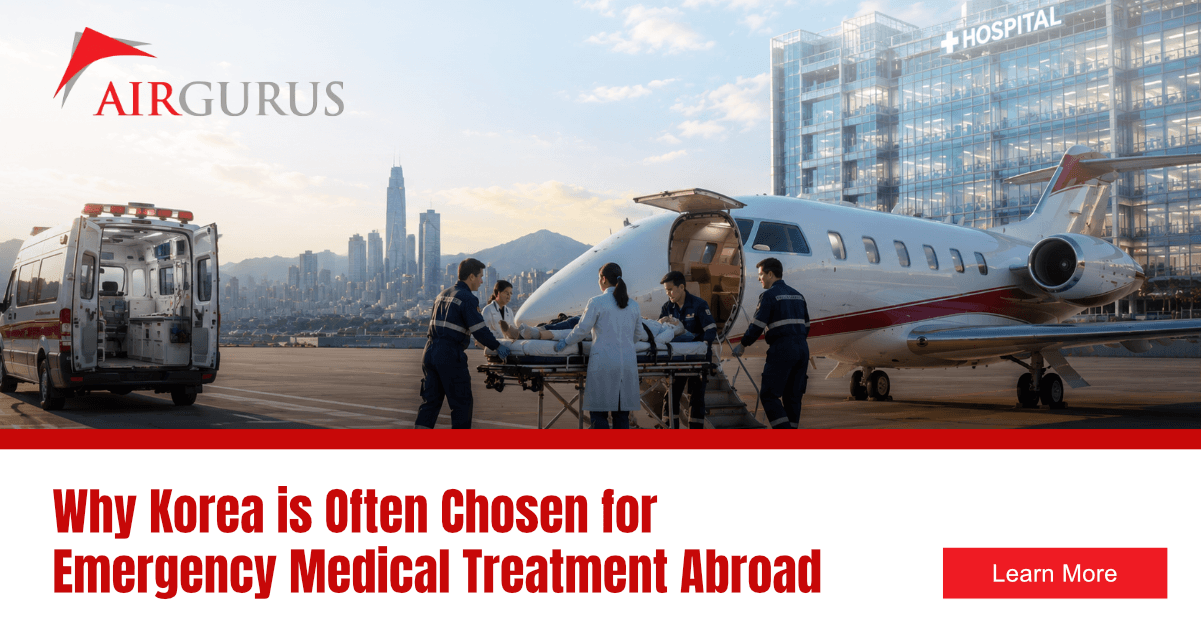
When a patient requires urgent or specialized medical care, finding the right healthcare facility can become a priority. In some cases, local treatment options may not provide the specialized expertise, technology, or medical resources needed, leading patients and families to consider treatment abroad. For patients from the Philippines, an air ambulance to Korea can provide medically supported transportation when specialized treatment is needed overseas.
South Korea has become one of Asia’s most recognized healthcare destinations due to its advanced hospitals, experienced medical specialists, and modern medical technology. Through international medevac services, patients can access specialized care overseas while receiving medical assistance throughout the transfer process.
Why Choose an Air Ambulance to Korea for Medical Treatment?
South Korea has developed a strong reputation as a healthcare destination, with advanced medical infrastructure, specialized treatment capabilities, and experienced medical professionals. The Medical Korea initiative provides information and support for international patients seeking healthcare services in South Korea.
Many hospitals in Korea can manage complex medical cases, including:
Cardiac emergencies
Neurological conditions
Cancer treatment
Organ transplantation
Severe trauma cases
Advanced surgical procedures
Patients who need specialized treatment may travel to Korea for advanced medical care. A coordinated air medical service can help transport them safely while providing medical support throughout the journey.
These healthcare capabilities have made South Korea a preferred destination for international patients seeking emergency and specialized medical treatment.
When Is an International Medevac to Korea Necessary?
An international medevac may be necessary when urgent care is unavailable locally. It may also be recommended when a physician requires transfer to a specialized facility.
Patients may require medical transfer for situations such as:
Critical illnesses requiring advanced monitoring
Emergency procedures
Severe injuries
Complex medical conditions
Patients needing specialized treatment abroad
Patients who cannot safely travel on commercial airlines may require an air ambulance. It provides dedicated medical transport with continuous support throughout the journey.
Unlike standard flights, an air medical service provides medical planning, specialized equipment, and trained healthcare professionals to support the patient during transport.
Choosing a Reliable Air Ambulance Provider
Selecting the right provider is an important part of arranging an international medical transfer. Patients and families should consider the provider’s medical expertise, operational experience, safety procedures, and compliance with healthcare and aviation standards.
A trusted provider should offer:
Experienced medical teams
Properly equipped aircraft
International transfer capabilities
Hospital coordination support
A CAAP and DOH compliant air ambulance follows the required aviation and healthcare standards in the Philippines, helping ensure that life flights are performed safely and professionally.
Conclusion
South Korea continues to be a preferred destination for patients seeking emergency and specialized medical treatment abroad. Its advanced healthcare facilities, experienced specialists, and modern medical technology make it an attractive option for patients requiring access to higher levels of care.
Through professional air ambulanceand international medevac services, patients from the Philippines can be transported safely while receiving the necessary medical support throughout the transfer.
With proper planning, experienced medical teams, and a reliable air medical service provider like Airgurus, patients can access specialized treatment in Korea with greater confidence during critical medical situations.
About Airgurus
Airgurus provides fast and reliable air medical service for emergencies, ensuring safe and efficient patient transport. Our CAAP and DOH compliant air ambulance team offers dependable air ambulance and medevac solutions, including ICU air ambulance care, rescue helicopters, and life flights for urgent situations. We manage both domestic and international medevac, coordinating with hospitals and healthcare professionals to ensure patients reach the right medical facilities across the Philippines and beyond. Whether it’s city-to-city transfers or reaching remote areas, Airgurus prioritizes safety, speed, and patient comfort. Call our air ambulance number +63 9178857911 today to learn more about how our air medical transport services can support your emergency needs.
Every second matters when a medical emergency occurs. For patients requiring specialized treatment, complex surgery, or advanced critical care, an air ambulance Philippines to Singapore service can provide medically supervised transport to access the appropriate care in Singapore.
Singapore has a well-developed healthcare system with acute hospitals and specialized medical centres. The Singapore Ministry of Health lists hospitals that provide acute and specialist services, including national specialty centres for areas such as cancer, cardiac care, and neuroscience. However, patients who are too unstable for commercial air travel may need an air ambulance for safer international medical transport.
Considering an air ambulance from the Philippines to Singapore? Learn about the costs involved, the factors that affect pricing, and key considerations when arranging medical transport for a patient.
Air Ambulance Philippines to Singapore: Estimated Cost
Air ambulance flights from the Philippines to Singapore typically cost $25,000–$45,000 USD, depending on the service required.
Life flight providers customize every medical flight based on the patient’s needs, offering tailored quotes instead of fixed rates.
Cost Breakdown Factors of Air Ambulance
The air ambulance cost depends on several key factors:
Aircraft Type: An air ambulance helicopter or domestic rescue helicopters are ideal for short, island-to-island hops. However, cross-border international medevac missions require specialized fixed-wing medical jets capable of flying at higher altitudes and longer distances.
Medical Staffing: Every flight includes a specialized medical team. A paramedic and a flight nurse are needed for a typical transfer. However, highly critical patients requiring an ICU air ambulance will need a specialized flight physician or cardiologist, which increases the cost.
Airport fees and permissions: The total cost may include ground handling, airspace permissions, and landing fees. These can vary by airport, including NAIA in Manila and Changi in Singapore.
Bed-to-Bed Service: Comprehensive medevac services can include ground ambulance transfers at both ends. This covers transport from the Philippine hospital to the aircraft. It also includes transfer from Changi Airport to the receiving hospital in Singapore.
What is Included in an ICU Air Ambulance?
For patients suffering from severe trauma, cardiac emergencies, or critical respiratory issues, medical teams upgrade standard life flights to intensive care levels. An ICU air ambulance acts as a fully functional, mobile intensive care unit in the sky.
Specialized air ambulance flights include:
Advanced ventilators and supplemental oxygen systems
Real-time cardiac monitors and defibrillators
Intravenous (IV) pumps and specialized emergency medications
Critical care specialists trained to handle altitude-related physiological changes
What to Look for in an Air Ambulance Service Provider?
When coordinating an international medevac, safety and legality cannot be compromised. You must ensure that the provider uses a CAAP and DOH-compliant air ambulance.
CAAP (Civil Aviation Authority of the Philippines): Ensures the aircraft is strictly maintained, fully certified for medical transport, and flown by certified pilots under stringent aviation safety laws.
DOH (Department of Health): Certifies that the medical equipment, sanitation protocols, and onboard medical staff meet the highest national healthcare standards for emergency transfers.
Choosing a compliant provider like Airgurus ensures that your loved one is in safe hands and prevents costly legal or operational delays during the trip.
Conclusion
The cost of a life flight from the Philippines to Singapore depends on several factors, including the patient’s medical condition, aircraft requirements, level of medical support needed, and the complexity of the transfer. Since every case is different, a proper medical assessment is necessary to determine the safest and most appropriate transport solution.
For patients needing treatment abroad, reaching the destination is only one part of the journey. Medical support, coordination, and care throughout the transfer are equally important.
Working with an experienced air ambulance provider like Airgurus ensures safe, efficient transport and greater confidence during critical moments.
About Airgurus
Airgurus provides fast and reliable air medical service for emergencies, ensuring safe and efficient patient transport. Our CAAP and DOH compliant air ambulance team offers dependable air ambulance and medevac solutions, including ICU air ambulance care, rescue helicopters, and life flights for urgent situations. We manage both domestic and international medevac, coordinating with hospitals and healthcare professionals to ensure patients reach the right medical facilities across the Philippines and beyond. Whether it’s city-to-city transfers or reaching remote areas, Airgurus prioritizes safety, speed, and patient comfort. Call our air ambulance number +63 9178857911 today to learn more about how our air medical transport services can support your emergency needs.